• 2010 nasa special
    a total eclipse of the Sun is visible from within a narrow corridor that traverses Earth's southern Hemisphere. The path of the Moon's umbral shadow crosses the South Pacific Ocean where it makes no landfall except for Mangaia (Cook Islands) and Easter Island (Isla de Pascua).
Showing posts with label Shuttle Station. Show all posts

Pad Preps Continue; Crew Returns to JSC

Launch Pad 39A technicians at NASA's Kennedy Space Center in Florida will install the cargo for the STS-129 mission into space shuttle Atlantis' payload bay today.

The payload consists of Express Logistics Carrier 1 and 2, holding about 28,000 pounds of supplies and spare parts for the International Space Station.

Workers also will attach the orbiter midbody umbilical unit from the pad's rotating service structure to the shuttle today. The unit provides access to and permits servicing of Atlantis' mid-fuselage area. Liquid oxygen and liquid hydrogen for the fuel cells and gases, such as nitrogen and helium, are provided through the unit.

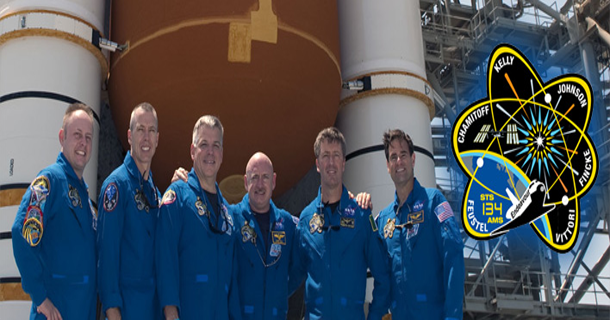
The six Atlantis astronauts returned to NASA's Johnson Space Center in Houston yesterday after completing the Terminal Countdown Demonstration Test, or TCDT, training. They'll conduct final launch preparations at Johnson before flying back to Kennedy for the anticipated launch to the space station at 2:28 p.m. EST on Nov. 16.

My Tribute to IYA 2009 : A Poem on Pluto

Share/Save/Bookmark

Here is my tribute to IYA 2009: A PoemI composed this in early 2007, when I was the president of Anandian Astronomical Association for the years 2006/2007. However now it's the almost the end of 2009. Therefore, while IYA 2009 is still due, I hit on...

Halloween's Moon


Illuminating the landscape all through the night of November 2nd, this week's bright Full Moon was known in the northern hemisphere as a Hunter's Moon. But this dramatic view of the shining lunar orb, from Sobreda, Portugal, was captured just a few nights earlier, on Halloween. In the spirit of the season, the image plays a little trick. The picture is actually two digital photos - one short and one long exposure. They were combined to bring out the details of the bright lunar surface and the fainter features in the dark, surrounding clouds, in a single image. Of course, you may recognize some of the spookier shapes in the clouds as having visited your neighborhood last week, along with Halloween's Moon.

Unsettled Youth: Spitzer Observes a Chaotic Planetary System


Before our planets found their way to the stable orbits they circle in today, they wiggled and jostled about like unsettled children. Now, NASA's Spitzer Space Telescope has found a young star with evidence for the same kind of orbital hyperactivity. Young planets circling the star are thought to be disturbing smaller comet-like bodies, causing them to collide and kick up a huge halo of dust.

The star, called HR 8799, was in the news last November 2008, for being one of the first of two stars with imaged planets. Ground-based telescopes at the W.M. Keck Observatory and the Gemini Observatory, both in Hawaii, took images of three planets orbiting in the far reaches of the system, all three being roughly 10 times the mass of Jupiter. Another imaged planet was also announced at the same time around the star Fomalhaut, as seen by NASA's Hubble Space Telescope. Both HR 8799 and Fomalhaut are younger and more massive than our sun.

Astronomers had previously used both Spitzer and Hubble to image a rotating disk of planetary debris around Fomalhaut, which is 25 light-years from Earth. HR 8799 is about five times farther away, so scientists weren't sure if Spitzer would be able to capture a picture of its disk. To their amazement and delight, Spitzer succeeded. The picture can be seen online at http://spitzer.caltech.edu/images/2781 .

The Spitzer team, led by Kate Su of the University of Arizona, Tucson, says the giant cloud of fine dust around the disk is very unusual. They say this dust must be coming from collisions among small bodies similar to the comets or icy bodies that make up today's Kuiper Belt objects in our solar system. The gravity of the three large planets is throwing the smaller bodies off course, causing them to migrate around and collide with each other. Astronomers think the three planets might have yet to reach their final stable orbits, so more violence could be in store.

"The system is very chaotic and collisions are spraying up a huge cloud of fine dust," said Su. "What's exciting is that we have a direct link between a planetary disk and imaged planets. We've been studying disks for a long time, but this star and Fomalhaut are the only two examples of systems where we can study the relationships between the locations of planets and the disks."

When our solar system was young, it went through similar planet migrations. Jupiter and Saturn moved around quite a bit, throwing comets around, sometimes into Earth. Some say the most extreme part of this phase, called the late heavy bombardment, explains how our planet got water. Wet, snowball-like comets are thought to have crashed into Earth, delivering life's favorite liquid.

The Spitzer results were published in the Nov. 1 issue of Astrophysical Journal. The observations were made before Spitzer began its "warm" mission and used up its liquid coolant.

X-38 Crew Return Vehicle Finds New Home


One of NASA's three X-38 Crew Return Vehicle technology demonstrators that flew at NASA's Dryden Flight Research Center at Edwards Air Force Base, Calif., a decade ago has found a new home in America's heartland.

In this image from test flights in 1999, the X-38 research vehicle drops away from NASA's B-52 mothership immediately after being released from the B-52's wing pylon. More than 30 years earlier, this same B-52 launched the original lifting-body vehicles flight tested by NASA and the Air Force at what is now called the Dryden Flight Research Center and the Air Force Flight Test Center.

The wingless lifting body craft was transferred this past weekend from NASA's Johnson Space Center in Houston to the Strategic Air and Space Museum, located just off Interstate 80 at Ashland, Neb., about 20 miles southeast of Omaha. The X-38 adds to the museum's growing collection of aerospace vehicles and other historical artifacts.

The move of the second X-38 built to the museum has a fitting connection, as the X-38 vehicles were air-launched from NASA's famous B-52B 008 mothership. The B-52 bomber served as the backbone of the Air Force's Strategic Air Command during the command's history.

Prior to cancellation, the X-38 program was developing the technology for proposed vehicles that could return up to seven International Space Station crewmembers to Earth in case of an emergency. These vehicles would have been carried to the space station in the cargo bay of a space shuttle and attached to station docking ports. If an emergency arose that forced the ISS crew to leave the space station, a Crew Return Vehicle would have undocked and returned them to Earth much like the space shuttle, although the vehicle would have deployed a parafoil for the final descent and landing.

NASA eClips Educators Traveling in November and December

NASA eClips™ educators may be coming to your town in November and December. Check the schedule below and come join us if you can!

Date/Time

Event/Presentation

Location

November 6 --12:30 p.m.

NCTM Regional Conference NASA eClips™ for Elementary Students: Effective Ways to Engage Students in Science and Mathematics

Minneapolis, MN

November 9 -- 2:15 p.m.

Great Lakes 1:1 Computing Conference -- Modeling and Simulation in the Math and Science Classroom

Chicago, IL

November 9 -- 3:15 p.m.

Great Lakes 1:1 Computing Conference -- NASA eClips™

Chicago, IL

November 13 -- 9:30 a.m.

NSTA Regional Conference NASA eClips™ for Secondary Students: Using Video Segments to Engage Millennial Learners

Fort Lauderdale, FL

November 14 -- 9:30 a.m.

NSTA Regional Conference NASA eClips™ for Elementary Students: Effective Ways to Engage Students in Science

Fort Lauderdale, FL

November 15 - 16

Governors STEM Initiative

Roanoke, VA

November 18 -- 4:30 p.m. ET

NASA Education Resources Showcase

Virtual. Sign up here: http://dln.nasa.gov/dln/

November 20 -- 8:00 a.m

NCTM Regional Conference NASA eClips™ for Secondary Students: Using Video Segments to Engage Millennial Learners

Nashville, TN

November 21

Virginia Air and Space Center

Hampton, VA

December 4 -- 9:30 a.m.

NSTA Regional Conference NASA eClips™ for Secondary Students: Using Video Segments to Engage Millennial Learners

Phoenix, AZ