


Obama to Watch Shuttle Launch as Florida’s ‘Space Coast’ Sees Jobs Lost
 11:06 PM
 Nasa Information
, Posted in
International Space Station
,
NASA
,
nasa education
,
nasa images
,
National Aeronautics and Space Administration
,
0 Comments
Nasa Information
, Posted in
International Space Station
,
NASA
,
nasa education
,
nasa images
,
National Aeronautics and Space Administration
,
0 Comments

President Barack Obama is set to bid a personal farewell to America’s manned space shuttle at Cape Canaveral today, as Florida’s “space coast” prepares to say goodbye to thousands of NASA jobs in a state crucial to Obama’s re-election.
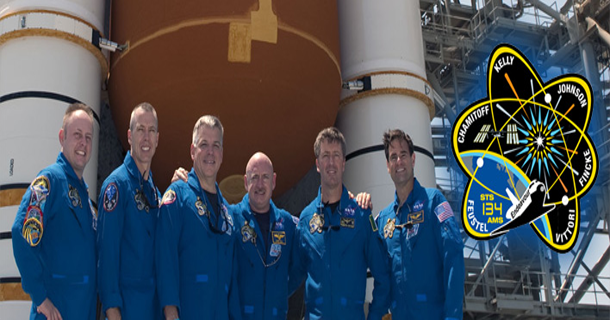
Obama is scheduled to watch the Endeavour’s final lift-off, the second-to-last shuttle launch in the program’s 30-year history. Also in the audience will be U.S. Representative Gabrielle Giffords, who is still recovering from a head wound she suffered in a mass shooting in Tucson, Arizona, on Jan. 8. Her husband, Navy Captain Mark Kelly, will be commanding the Endeavour on its 14-day mission to the International Space Station.
“At the Cape they stand to lose seven or eight thousand jobs in the next year because of the shuttle program ending,” said Bretton Alexander, the president of the Commercial Spaceflight Federation, a Washington-based trade association of companies promoting commercial human spaceflight. Obama and Senator Bill Nelson, a Florida Democrat who in 1986 flew one shuttle mission as a payload specialist, “are taking a lot of heat for that, but that was going to happen no matter what,” he said.
The shuttle’s demise was set in motion by President George W. Bush in 2004, and Obama’s plan to retool NASA’s mission kept the decision in effect.
The president has directed the National Aeronautics and Space Administration to focus on developing rocket systems that might eventually take humans into deep space, while relying on private companies to build spacecraft to ferry astronauts -- and potentially tourists -- to the space station.
Rocket Competition
On April 18, NASA announced $269 million in contracts to four companies competing to build commercial spaceships, with Chicago-based Boeing Co. (BA) receiving $92.3 million and Sierra Nevada Corp., based in Sparks, Nevada, winning $80 million. Space Exploration Technologies Corp. in Hawthorne, California -- whose chief executive officer, Elon Musk, gave Obama a tour of his launch facility last year -- received $75 million. Kent, Washington-based Blue Origin got $22 million.
“The space shuttle is coming to an end and it’s really pretty far past its sell-by date,” said Musk, whose company has a $1.6 billion NASA contract to deliver cargo to the space station. “It’s an amazing work of engineering, but it sort of architecturally is very expensive.”
The goal of the new system should be to lower the cost per mission and the improve safety, he said, noting the catastrophic failures aboard two shuttles that resulted in the deaths of 14 astronauts.
The space shuttle costs an average of about $450 million per mission, according to NASA. Musk estimates that SpaceX flights will cost $140 million.
New Era
“The public should see this as a dawning of a new era, which will hopefully be a significant improvement in the technology of space travel,” he said.
For some former astronauts, the end of the shuttle program should be an opportunity to revitalize space exploration.
“If we had evolved it, instead of just using it, we could have got the launch cost down and made it a safe vehicle,” said Loren Acton, a former astronaut and currently a professor at Montana State University in Bozeman.
“It’s a tremendous spacecraft,” he said. “I will be sorry to see it go.”
In his fiscal year 2012 budget, Obama proposed $18.7 billion for NASA, $1.5 billion less than his request last year. He also has ended NASA’s Constellation program, developed during the Bush administration, which would have built spacecraft for a return to the moon by 2020. Instead, he is seeking to focus NASA on exploring deep space and sending humans to Mars by the mid-2030s.
Consequences for Florida
Florida Republicans have criticized Obama’s approach.
While today’s launch “is an opportunity to celebrate Endeavour’s history and the brave people who have made it a proud one, it is also a bittersweet occasion,” Senator Marco Rubio wrote in the Orlando Sentinel on April 26. “The president’s space policy is jeopardizing America’s longstanding commitment to manned space exploration. This has serious consequences for Florida.”
The job losses in the space program will add to the woes of a state that has struggled to recover from the recession. While the Bloomberg Florida Index (BFLX) of stocks has gained 9.8 percent over the past year, the state’s unemployment rate is at 11.1 percent, compared with the national average of 8.8 percent.
Florida, the fourth-biggest U.S. state by population, has been a swing state in national elections and is a target for both parties in 2012.
Political Prize
Obama won Florida with 51 percent of the vote in 2008. Republican Bush claimed it in the two prior presidential elections, including the contested -- and pivotal -- balloting in 2000. In 2012, Florida will have adding importance because population gains will add two more Electoral College votes, giving whoever wins the state 29 of the 270 votes that are required for victory in the presidential election.
Planning to watch the launch with the president is Giffords, who made the trip to Florida from the Houston facility where she is undergoing rehabilitation. The Arizona Democrat was shot in the head during the attack in which six people were killed and 13, including Giffords, were wounded. She has begun to speak and is standing on her own, according to the Arizona Republic.
Before arriving in Florida, Obama is scheduled to stop in Alabama to view the damage from some of the tornadoes that tore through the U.S. Southeast. At least 280 people were killed in six states, the Associated Press reported, with the heaviest toll in Alabama.
To contact the reporter on this story: Hans Nichols in Washington at hnichols2@bloomberg.net
To contact the editor responsible for this story: Mark Silva at msilva34@bloomberg.net.
Obama is scheduled to watch the Endeavour’s final lift-off, the second-to-last shuttle launch in the program’s 30-year history. Also in the audience will be U.S. Representative Gabrielle Giffords, who is still recovering from a head wound she suffered in a mass shooting in Tucson, Arizona, on Jan. 8. Her husband, Navy Captain Mark Kelly, will be commanding the Endeavour on its 14-day mission to the International Space Station.
“At the Cape they stand to lose seven or eight thousand jobs in the next year because of the shuttle program ending,” said Bretton Alexander, the president of the Commercial Spaceflight Federation, a Washington-based trade association of companies promoting commercial human spaceflight. Obama and Senator Bill Nelson, a Florida Democrat who in 1986 flew one shuttle mission as a payload specialist, “are taking a lot of heat for that, but that was going to happen no matter what,” he said.
The shuttle’s demise was set in motion by President George W. Bush in 2004, and Obama’s plan to retool NASA’s mission kept the decision in effect.
The president has directed the National Aeronautics and Space Administration to focus on developing rocket systems that might eventually take humans into deep space, while relying on private companies to build spacecraft to ferry astronauts -- and potentially tourists -- to the space station.
Rocket Competition
On April 18, NASA announced $269 million in contracts to four companies competing to build commercial spaceships, with Chicago-based Boeing Co. (BA) receiving $92.3 million and Sierra Nevada Corp., based in Sparks, Nevada, winning $80 million. Space Exploration Technologies Corp. in Hawthorne, California -- whose chief executive officer, Elon Musk, gave Obama a tour of his launch facility last year -- received $75 million. Kent, Washington-based Blue Origin got $22 million.
“The space shuttle is coming to an end and it’s really pretty far past its sell-by date,” said Musk, whose company has a $1.6 billion NASA contract to deliver cargo to the space station. “It’s an amazing work of engineering, but it sort of architecturally is very expensive.”
The goal of the new system should be to lower the cost per mission and the improve safety, he said, noting the catastrophic failures aboard two shuttles that resulted in the deaths of 14 astronauts.
The space shuttle costs an average of about $450 million per mission, according to NASA. Musk estimates that SpaceX flights will cost $140 million.
New Era
“The public should see this as a dawning of a new era, which will hopefully be a significant improvement in the technology of space travel,” he said.
For some former astronauts, the end of the shuttle program should be an opportunity to revitalize space exploration.
“If we had evolved it, instead of just using it, we could have got the launch cost down and made it a safe vehicle,” said Loren Acton, a former astronaut and currently a professor at Montana State University in Bozeman.
“It’s a tremendous spacecraft,” he said. “I will be sorry to see it go.”
In his fiscal year 2012 budget, Obama proposed $18.7 billion for NASA, $1.5 billion less than his request last year. He also has ended NASA’s Constellation program, developed during the Bush administration, which would have built spacecraft for a return to the moon by 2020. Instead, he is seeking to focus NASA on exploring deep space and sending humans to Mars by the mid-2030s.
Consequences for Florida
Florida Republicans have criticized Obama’s approach.
While today’s launch “is an opportunity to celebrate Endeavour’s history and the brave people who have made it a proud one, it is also a bittersweet occasion,” Senator Marco Rubio wrote in the Orlando Sentinel on April 26. “The president’s space policy is jeopardizing America’s longstanding commitment to manned space exploration. This has serious consequences for Florida.”
The job losses in the space program will add to the woes of a state that has struggled to recover from the recession. While the Bloomberg Florida Index (BFLX) of stocks has gained 9.8 percent over the past year, the state’s unemployment rate is at 11.1 percent, compared with the national average of 8.8 percent.
Florida, the fourth-biggest U.S. state by population, has been a swing state in national elections and is a target for both parties in 2012.
Political Prize
Obama won Florida with 51 percent of the vote in 2008. Republican Bush claimed it in the two prior presidential elections, including the contested -- and pivotal -- balloting in 2000. In 2012, Florida will have adding importance because population gains will add two more Electoral College votes, giving whoever wins the state 29 of the 270 votes that are required for victory in the presidential election.
Planning to watch the launch with the president is Giffords, who made the trip to Florida from the Houston facility where she is undergoing rehabilitation. The Arizona Democrat was shot in the head during the attack in which six people were killed and 13, including Giffords, were wounded. She has begun to speak and is standing on her own, according to the Arizona Republic.
Before arriving in Florida, Obama is scheduled to stop in Alabama to view the damage from some of the tornadoes that tore through the U.S. Southeast. At least 280 people were killed in six states, the Associated Press reported, with the heaviest toll in Alabama.
To contact the reporter on this story: Hans Nichols in Washington at hnichols2@bloomberg.net
To contact the editor responsible for this story: Mark Silva at msilva34@bloomberg.net.


