9:51 PM

Nasa Information
, Posted in
kennedy space station
,
0 Comments

(March 1) -- Apart from claiming the lives of hundreds of people and wreaking enormous property damage, Chile's massive earthquake has likely altered the distribution of the Earth's overall mass, scientists from NASA say.
As a result, the length of a day is now a little shorter than it was before Saturday's magnitude 8.8 earthquake.
"The length of the day should have gotten shorter by 1.26 microseconds [millionths of a second]," Richard Gross, a geophysicist at NASA's Jet Propulsion Laboratory, told Bloomberg. "The axis about which the Earth's mass is balanced should have moved by 2.7 milliarcseconds [about 8 centimeters or 3 inches]."
More Coverage:
The speed that the Earth rotates also increased slightly in 2004 following the earthquake that struck the off the coast of Sumatra, Indonesia. That 9.1 earthquake shortened the length of an Earth day by 6.8 microseconds, scientists say.
The reason is that sudden changes in the dimensions of the Earth's tectonic plates, like those experienced in the earthquakes in Chile and Indonesia, can alter the velocity.
David Kerridge, the head of Earth hazards and systems at the British Geological Survey in Edinburgh, likened the change in rotation speed to what happens when a figure skater draws her arms in close to her body while spinning. "As she pulls her arms in," Kerridge told Bloomberg, "she gets faster and faster. It's the same idea with the Earth going around: If you change the distribution of mass, the rotation rate changes."
9:49 PM
Nasa Information
, Posted in
kennedy space station
,
0 Comments
(PTI) Scientists have detected more than 40 ice-filled craters in the moon's North Pole using data from a NASA radar that flew aboard India's Chandrayaan-I.
NASA's Mini-SAR instrument, lightweight, synthetic aperture radar, found more than 40 small craters with water ice. The craters range in size from 2 to 15 km in diameter.
The finding would give future missions a new target to further explore and exploit, a NASA statement said, adding it is estimated that there could be at least 600 million metric tons of water ice in the craters.
"The emerging picture from the multiple measurements and resulting data of the instruments on lunar missions indicates that water creation, migration, deposition and retention are occurring on the moon," Paul Spudis, principal investigator of the Mini-SAR experiment at the Lunar and Planetary Institute, said yesterday.
9:45 PM
Nasa Information
, Posted in
kennedy space station
,
0 Comments
NASA's Mars Odyssey began a second campaign Monday to check on whether the Phoenix Mars Lander has revived itself after the northern Martian winter. The orbiter received no signal from the lander during the first 10 overflights of this campaign. Odyssey will listen for Phoenix during 50 additional overflights, through Feb. 26, during the current campaign.
Phoenix landed on Mars on May 25, 2008, and operated successfully in the Martian arctic for about two months longer than its planned three-month mission. Operations ended when waning sunlight left the solar-powered craft with insufficient energy to keep working. The season at the Phoenix landing site is now mid-springtime, with the sun above the horizon for roughly 22 hours each Martian day. That is comparable to the illumination that Phoenix experienced a few weeks after completing its three-month primary mission.
Phoenix was not designed to withstand the extremely low temperatures and the ice load of the Martian arctic winter. In the extremely unlikely event that the lander has survived the winter and has achieved a stable energy state, it would operate in a mode where it periodically awakens and transmits a signal to any orbiter in view.
A third campaign to check on whether Phoenix has revived itself is scheduled for April 5-9, when the sun will be continuously above the Martian horizon at the Phoenix site.
Mars Odyssey is managed for NASA's Science Mission Directorate by the Jet Propulsion Laboratory, a division of the California Institute of Technology in Pasadena. Lockheed Martin Space Systems, Denver, is the prime contractor for the project and made the spacecraft. The successful Phoenix mission was led by Peter Smith of the University of Arizona, Tucson, with project management at JPL and development partnership at Lockheed Martin. International contributions came from the Canadian Space Agency; the University of Neuchatel, Switzerland; the universities of Copenhagen and Aarhus in Denmark; the Max Planck Institute in Germany; the Finnish Meteorological Institute; and Imperial College, London.
9:39 PM
Nasa Information
, Posted in
kennedy space station
,
0 Comments
Teachers found themselves on the other side of the desk this week as they played the part of student, participating in workshops and learning how to get students psyched about science during the second annual NASA STEM Educators Workshop series in Charlotte, N.C.The three-day free workshop held at the IBM Center consisted of 40 sessions that offered elementary, middle and high school teachers creative and hands-on ways to incorporate NASA content into their classrooms.For elementary teacher Nancy Brooks from Kannapolis, N.C., it didn't take long to find something that would spark her students' interest.During a workshop Brooks learned how to make an end effector, which in robotics is the device at the end of a robot arm."It only took two Styrofoam cups, string, tape, and a little bit of practice," said Brooks who planned on having her students complete the same project the very next day."There are so many resources and activities here that I can take back with me and use to motivate my students to dig a little deeper," she continued.Dynae Fullwood, aerospace education specialist from NASA's Langley Research Center, said the workshops are specifically designed to give teachers tangible resources for immediate use in the classrooms."We know teachers face an everyday challenge to make concepts exciting and interesting for students," Fullwood said.In the hands-on lab elementary and middle school teachers examined robots and did their best to follow the instructions of their teacher Taunya Sweet, a traveling education specialist for NASA's Aerospace Education Services Project (AESP).Similar to students, the teachers were anxious to get started and play with their robot."Don't touch them," cautioned Sweet. "I know these robots are interesting, but wait until after we observe them to turn them on."In another classroom, teachers in the video conferencing lab listened as Karen Ricks from NASA Langley's Digital Learning Network discussed "Traveling to Space" over a live digital feed. Just down the hall, NASA exhibits encouraged teachers to make Post Cards from space and find their "space weight." The sessions culminated with a guest appearance from Astronaut Leland Melvin, who only the day before gave an inspiring speech to hundreds of middle school students at the CIAA Education Day, about "living your dreams."Melvin, who got his start in fiber optic sensors at NASA Langley and went on to become an astronaut with two missions under his belt, appealed to the teachers as a fellow educator himself.As the co-manager of NASA's Educator Astronaut Program, Melvin travels across the country engaging students and teachers in the excitement of space exploration. He also came from a family of educators. Both of his parents were teachers."My dad, the educator, was my role model, my inspiration," he said.He encouraged teachers to find their own inspiration and to continue inspire and be role models for the next generation."We need to keep the kids excited about STEM subjects," he said to a round of applause.Melvin stressed the importance education played in his life even when he was on track to play football in NFL."I always had a back-up plan," Melvin said. "And that plan was education."A pulled hamstring thwarted Melvin's dreams of playing for the Dallas Cowboys, but his enrollment in graduate school at the University of Virginia kept him on track to realize his dreams, which turned to be helping others find theirs.
At NASA's
Kennedy Space Center in Florida, technicians are completing the shuttle interface and hydraulic leak tests in the Vehicle Assembly Building today.
Space shuttle Endeavour and its solid rocket boosters will be powered down and prepared for their move, or rollout, to Launch Pad 39A scheduled for early January 2010.
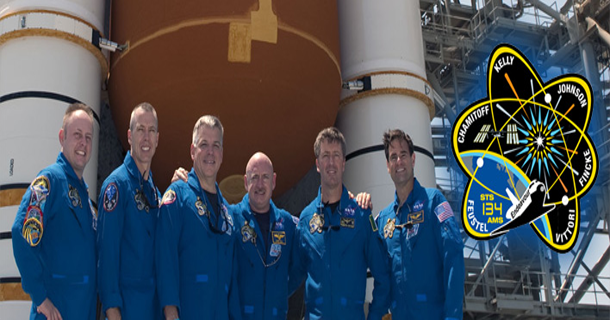
The six STS-130 mission astronauts will carry out a variety of administrative duties this morning at NASA's Johnson Space Center in Houston.
Commander George Zamka and Pilot Terry Virts also will practice shuttle landing techniques in T-38 jets and NASA's Shuttle Training Aircraft.