• 2010 nasa special
    a total eclipse of the Sun is visible from within a narrow corridor that traverses Earth's southern Hemisphere. The path of the Moon's umbral shadow crosses the South Pacific Ocean where it makes no landfall except for Mangaia (Cook Islands) and Easter Island (Isla de Pascua).
Showing posts with label Nasa Information-Nasa Information-Nasa Info-Nasa Images-Space Shuttle Space Station-Nasa Tv -Nasa News-Space Station Informations. Show all posts

NASA Names Mission Control for Legendary Flight Director Christopher Kraft


jsc2011e036649: Christopher Kraft
Dr. Christopher C. Kraft Jr. responds to a large crowd of admirers during a formal celebration of a naming for the facility and the unveiling of a new nameplate on the building. Photo credit: NASA

NASA is recognizing Christopher C. Kraft Jr., America's first human space mission flight director, by naming the Mission Control Center in his honor for his service to the nation and its space programs.

Johnson Space Center Director Michael Coats made it official April 14 at a dedication ceremony and unveiling of a new nameplate on the building, designating the legendary building as the Christopher C. Kraft Jr. Mission Control Center.


“Dr. Kraft’s life stands as a testament to his dream of exploring space. A dream he realized here on Earth, in this building and at this center, through his engineering and managerial expertise,” said Coats. “He is a space pioneer without whom we’d never have heard those historic words on the surface of the moon, ‘Houston, Tranquility base here. The Eagle has landed.’ Those words effectively put Houston, and this building behind us, on the intergalactic map forever.”

Hundreds of NASA employees applauded as the nameplate was unveiled.

jsc2011e036650: Building 30
After more than 45 years of service to the nation's space program, the naming for NASA's mission control center became official with the unveiling of a new nameplate on the building, designating the legendary building as the Christopher C. Kraft, Jr., Mission Control Center. Photo credit: NASA

“When we started the Space Task Group in 1958, I don’t think any of us appreciated what we were up to, where we were going, what it was going to result in, the impact on the country, the impact on the world,” Kraft said. “Our experiences, our joys, were something that we were all extremely proud of. We still are today. It’s great to be in this country where we can do that sort of thing. I’m pleased as I can be to have you name this building after me and not because it’s me, but because it is the flight control people and those people here at the Johnson Space Center.”

“Without Dr. Kraft’s leadership, the concept of mission control would not be what it is today,” Coats added. “The dedicated people inside this building have accomplished incredible things over the last five decades based on the foundations laid by Dr. Kraft and his early flight control development team.”

In addition to Coats and Kraft, the ceremony featured additional remarks by John McCullough, current chief of the NASA flight director’s office; Gene Kranz, Kraft’s successor as flight director and former director of Mission Operations, and Glynn Lunney, a former flight director who worked with Kraft, and also a former Space Shuttle Program manager and vice president of United Space Alliance.

S65-42844: Chris Kraft
Dr. Christopher C. Kraft Jr. is seen at his flight director console in the Mission Control Center during Gemini-Titan V flight simulation. Photo credit: NASA


As flight director, Kraft managed all of the Mercury and several Gemini missions, and was in that role for America’s first human spaceflight, first human orbital flight, and first spacewalk. He also was one of the designers and implementers of the Mission Control Center, the heart of all NASA crewed space missions.

Kraft joined NASA's predecessor agency, the National Advisory Committee for Aeronautics, in 1945. In 1958, he joined the newly created NASA as one of the original members of the Space Task Group organized to design and manage Project Mercury. He moved from Langley Research Center in Virginia with that group to Houston in 1962, and was assigned to develop the facilities, systems and techniques necessary to support human spaceflights.

As a member of the flight operations division he was assigned the responsibility of putting together a “mission plan” for putting America’s first man into space. Instructions from his boss, Chuck Mathews were, “Chris, you come up with a basic mission plan. You know, the bottom-line stuff on how we fly a man from a launch pad into space and back again. It would be a good idea if you kept him alive.”

S68-18733: Chris Kraft
Dr. Robert R. Gilruth (right), MSC Director, sits with Dr. Christopher C. Kraft Jr., MSC director of flight operations, at his flight operations director console in the Mission Control Center during the Apollo 5 unmanned space mission. Photo credit: NASA
 
A vast set of challenges faced Kraft. He immediately recognized that during the fast-paced launch phase an astronaut could only do so much. He envisioned a team of specialists on the ground to monitor spacecraft health in real time. This involved defining/developing a first-of-a-kind operations facility, communications network, spacecraft tracking systems, telemetry, flight plans, timelines, constraints and flight rules, standard and contingency procedures as well as plans and techniques to locate and recover the astronaut and spacecraft after splashdown in the ocean. In addition, a group of engineers would need to be brought together and trained as a team to develop command and control protocols to for normal procedures as well as to immediately react to problems in real time.

Through his leadership the Mercury Control Center took shape at Cape Canaveral, Florida, and his concept of “Mission Control” was tested and developed successfully as he served as the Flight Director for seven unmanned and six manned missions during the Mercury Program.

In 1965, the Manned Spacecraft Center’s “Mission Control Center (MCC) in Houston supported its first human spaceflight during the second two-manned Gemini flight, Gemini IV. At the helm again was Kraft as he continued to “invent” the MCC operation during the Gemini Program’s first rendezvous and spacewalk.

During the Apollo program Kraft became the Director of Flight Operations responsible for the overall manned spaceflight planning, training, and execution. His leadership in this arena continued through Apollo 12 in 1969, at which time he became Deputy Director of what is now Johnson Space Center. He served as the Center Director from January of 1972 until his retirement in 1982, playing a vital role in the success of the final Apollo missions, the first manned space station, Skylab, the first international space docking during the 1975 Apollo-Soyuz Test Project, and the first Space Shuttle flights.

S73-31875: Chris Kraft
Four NASA officials, including Dr. Christopher C. Kraft Jr., monitor the current status of a problem in the Mission Operations Control Room of the Mission Control Center at the Johnson Space Center. Photo credit: NASA
  In retirement he has served as a consultant and board member of various Houston companies, as director-at-large of the Houston Chamber of Commerce, and as a member of the Board of Visitors at Virginia Polytechnic Institute and State University. His book, FLIGHT: My Life in Mission Control, was published in 2001 and was a New York Times bestseller.

Kraft has been recognized in many ways throughout his career. These include awards and honors such as four NASA Distinguished Service Medals and the Goddard Memorial Trophy. He is also the recipient of the National Space Trophy from the Rotary National Award for Space Achievement Foundation, which described him as “a driving force in the U.S. human space flight program from its beginnings to the Space Shuttle era, a man whose accomplishments have become legendary.” In 1965, his picture in the Mission Control Center appeared on the cover of “Time Magazine” in which he was profiled as the “Conductor in a Command Post.”

As Kraft’s protégé Flight Director Glynn Lunney, while providing an oral history, commented, “the Control Center today…is a reflection of Chris Kraft.” It seems quite appropriate that the JSC Building 30 Mission Control Center be named after Kraft for his innovative shaping of the initial organization and culture that to this day continues to serve this nation well during human space flight preparation and execution.

NASA delays shuttle

The 25th and final flight of shuttle Endeavour will slip 10 days to April 29, clearing the way for the previously scheduled launch of a robotic Russian space freighter and its arrival at the International Space Station.

The high-profile shuttle mission, commanded by the husband of critically wounded U.S. Rep. Gabrielle Giffords, coincidentally will take place the same day as the royal wedding of Prince William and Kate Middleton.

"Somehow I don't think that factored into (shuttle launch date) planning," said Allard Beutel, a spokesman for NASA's Kennedy Space Center. "It is what it is."
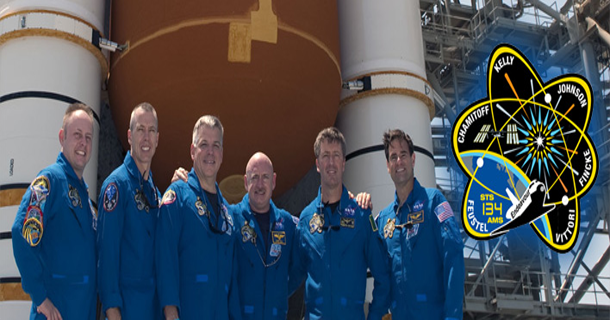
Endeavour and six astronauts aim to deliver a $2 billion cosmic ray detector that could shed new light on the origin, evolution and fate of the universe.

There has been a high level of human interest in the mission because Giffords, who was shot in the head during a Jan. 8 assassination attempt, is making a remarkable recovery and hopes to attend the launch.
The launch had been slated for April 19 -- a Tuesday. It's being retargeted for April 29 -- a Friday.
Beutel still expects large crowds at KSC and at popular public launch viewing sites across Florida's Space Coast.
"I'm pretty sure we'll probably have more people show up to cover the launch -- and definitely more people coming to the area to witness the launch -- now that it's moved to a Friday," Beutel said.

"It's an afternoon launch. People can take a half-day off. If we slip, we've got the weekend (to make additional attempts). I think that will probably factor into people's plans."
NASA already has received 1,200 requests from journalists who intend to come to KSC to cover the launch.

The Endeavour launch is scheduled at 3:47 p.m. EDT.
The shuttle slip will enable the previously scheduled April 27 launch of a supply-laden Russian Progress cargo carrier. It is scheduled to arrive at the station April 29.

NASA had hoped the Progress could launch as scheduled and then loiter in the vicinity of the station until Endeavour's crew could complete their mission and depart the outpost. The Progress, however, is carrying time-critical science experiments, so loitering was not an option.
NASA and its Russian partners require two to three days between the arrival and departure of different vehicles at the station.

To accommodate the changed shuttle schedule, United Launch Alliance shifted its planned launch of an Atlas V rocket from Cape Canaveral Air Force station to May 4.

Crew Prepares for Kounotori2 Departure


ISS026-E-034321: Dmitry Kondratyev and Paolo Nespoli
Expedition 27 Commander Dmitry Kondratyev and Flight Engineer Paolo Nespoli are pictured in the Destiny laboratory of the International Space Station. Credit: NASA
Following the Expedition 27 crew’s daily planning conference with flight control teams around the world, Flight Engineers Cady Coleman and Paolo Nespoli kicked off the workday Wednesday morning loading additional trash into the Japanese Kounotori2 H-II Transfer Vehicle for disposal. Kounotori2, which arrived at the station in late January, will be grappled with the station’s robotic arm and unberthed from the Earth-facing port of the Harmony node on Monday for a destructive re-entry in the Earth’s atmosphere Tuesday night.

Nespoli also spent some time sharpening his digital photography skills for the imagery he will collect of space shuttle Endeavour’s thermal protection system as it performs a back flip known as the Rendezvous Pitch Maneuver prior to docking. Currently targeted to launch April 19 on the STS-134 mission, Endeavour will deliver the Alpha Magnetic Spectrometer and spare parts to the orbiting complex.

As part of her role as chief medical officer, Coleman conducted some onboard training to maintain proficiency with the Health Maintenance System hardware, which may be used in contingency situations where crew life is at risk.

Cosmonaut Dmitry Kondratyev, commander of Expedition 27, devoted his time Wednesday to some routine maintenance and checkout activities in the Russian segment of the station.

The station’s residents also had several opportunities to observe and photograph our home planet from their unique vantage point as they orbit the Earth every 90 minutes. Among the sites suggested for photography Wednesday were the capital city of Prague in the Czech Republic and the island nation of São Tomé and Príncipe located in the Gulf of Guinea off the western coast of Africa.

JSC2011-E-027674: Expedition 27 and Soyuz booster
The Soyuz TMA-21 crew participates in dress rehearsal activities at the Baikonur Cosmodrome in Kazakhstan. Credit: NASA/Victor Zelentsov
Meanwhile, NASA astronaut Ron Garan and cosmonauts Andrey Borisenko and Alexander Samokutyaev continue their preparations to launch to the station aboard the Soyuz TMA-21 on April 4 to join the Expedition 27 crew as flight engineers. The Soyuz TMA-21, named for Yuri Gagarin, is scheduled for liftoff just one week shy of the 50th anniversary of Gagarin's historic journey into space from that same launch pad at the Baikonur Cosmodrome in Kazakhstan.

Australia Greens After Record Rains

Australia Greens After Record Rains
Color bar for Australia Greens After Record Rains

This vegetation image shows how plants responded to the rainfall along the border between Victoria and New South Wales, in the Murray River basin. It was made from measurements taken by the Moderate Resolution Imaging Spectroradiometer (MODIS) on NASA’s Terra satellite between September 7 and 22, 2010, compared to average conditions during the same period from 2000 to 2009. The image is the latest installment in the Earth Observatory’s World of Change: Drought Cycles in Australia.

Green dominates the 2010 image, indicating that plants were growing more robustly than the average for most of the region. Fields of crops form tiny squares and rectangles; natural vegetation is smoother and more continuous. In general, the natural vegetation responded to the rain more than nearby crops, though this may be a matter of timing. Many of the crops that grow in northern Victoria and southern New South Wales—including corn, sorghum, rice, cotton, millet, and potatoes—are usually planted beginning in September or October. The fields that show little response to the rain may have been planted with one of these crops or may be fallow for the year. Primary grain crops (wheat, barley, and oats) are usually growing by September.
The abundant rain made conditions for some crops ideal. As the end of the planting season neared in December, Australia was looking at the possibility of a record cotton harvest. The rain also helped refill reservoirs that had dwindled during the drought, making more water available for irrigated crops.

The rain also had negative consequences. Rivers throughout eastern Australia flooded. The lush vegetation and water supply created habitat for plague locusts; swarms of them were reported along the Murray River in early December.
By December 8, Australia had recorded its wettest spring on record. The unusual rainfall was caused by La Niña, which warms ocean temperatures north of Australia and strengthens trade winds, bringing rain to northern and eastern Australia. La Niña and its counterpart El Niño are major factors driving the cycles of drought and rain in eastern Australia.
  1. References

  2. Australian Government Bureau of Meteorology. (2010). Climate variability and El Niño. Accessed December 20, 2010.
  3. Australian Government Bureau of Meteorology. (2010).   Accessed December 20, 2010.
  4. Australian GovernmentBureau of Meteorology. (2010, December 8). La Niña dominates in the Pacific. Accessed December 20, 2010.
  5. Australian Government Bureauof Meteorology. (2010, September 21). Monthy weather review New South Wales August 2010. Accessed December 20, 2010.
  6. Australian Government Bureau of Meteorology. (2010, October 20). Monthy weather review New South Wales September 2010. Accessed December 20, 2010.
  7. Australian Government Bureau of Meteorology. (2010, September 30). Monthly weather review Victoria August 2010. Accessed December 20, 2010.
  8. Australian Government Bureauof Meteorology. (2010, October 20). Monthly weather review Victoria September 2010. Accessed December 20, 2010.
  9. Australian Government Department of Agriculture, Fisheries, and Forestry. (2010, December 13). Locust situation December 2010. Accessed December 20, 2010.
  10. Lindsey, R. (2009, December 12). Drought in southeast Australia. NASA Earth Observatory. Accessed December 20, 2010.
  11. Mita, D. (2010, December 10). Australia: Excellent rainfall raises prospects of a record cotton crop. In World Agricultural Production. United States Department of Agriculture Foreign Agricultural Service. Accessed December 20, 2010.
  12. United States Department of Agriculture Foreign Agricultural Service. (n.d.) Crop calendars for Australia. Accessed December 20, 2010.
NASA images by Jesse Allen and Robert Simmon, based on data provided by Inbal Becker-Reshef, with the Global Agriculture Monitoring Project. Caption by Holli Riebeek.

NASA Discarding Computers Still Containing Space Shuttle Data: Audit

Personnel at National Aeronautics and Space Administrators failed to remove data from obsolete computers before selling or discarding them, according to a NASA Office of Inspector General audit report released Dec.

Titled “Preparing for the Space Shuttle Program’s Retirement,” the audit focused on the disposal procedures for shuttle-related processing and information technology equipment that contain sensitive information about space shuttle operations and maintenance.

The audit looked at four NASA facilities—Kennedy Space Center in Florida, Johnson Space Center in Texas, Ames Research Center in California, and Langley Research Center in Virginia. Breaches were found at all four facilities, according the report.

During the course of the audit, inspectors found 14 computers still containing data out of a sample of 730 pieces of IT equipment that NASA was disposing. The auditors also found one computer being prepared for sale that still contained shuttle technology data that were subject to export controls under the International Traffic in Arms Regulations.

"Our review found serious breaches in NASA's IT security practices that could lead to the improper release of sensitive information related to the Space Shuttle and other NASA programs," NASA Inspector General Paul Martin said in a statement.

Any electronic storage device that has ever contained NASA information must be “sanitized” before being re-assigned, transferred, or discarded, according to NASA’s Procedual Requirements. Sanitation requires removing data from the device by overwriting, degaussing, and/or destroying the device so that it is impossible (or nearly so) to recover the data. After sanitizing, the devices have to pass a validation test to confirm the process was successful, according to the requirements.

While many hard drives passed the sanitation verification test prior to being sold, auditors found several instances of drives being sold despite failing the tests, according to the report. In one case, ten computers from the Kennedy Center were put up for sale even though they’d failed sanitation verification testing. Also at Kennedy, there were four computers being prepared for sale, despite clearly being marked that they’d failed. It was one of these computers that still contained shuttle technology data, according to the report.

Although the hard drives were being removed and destroyed at Langley Center before the computers were released to the public, personnel neglected to properly account for the removed drives, the auditors found. “Most concerning” was the fact that at Kennedy Center, the removed drives were kept in “an unsecured dumpster accessible to the public,” said the report.

Johnson Space Center and Ames Research Center were not conducting any verification tests to ensure the drives were sanitized, according to the audit. At the Kennedy Space Center, the drives were tested by a third-party contractor, but appropriate managers were not being notified properly when devices failed verification tests. The third-party testing company labeled the failed drives before returning them, but “despite clear markings indicating that the computers had failed verification testing, no one took action to remove the remaining data from the computers or to prevent their sale,” according to the report.

Kennedy, Johnson and Ames centers were all using unapproved sanitizing software, according to the report.

“During our audit, we discovered significant weaknesses in the sanitisation and disposal processes for IT equipment,” the auditors wrote in the report.

The audit also found that NASA was selling computers on which the computer’s IP address was prominently displayed. While the addresses themselves are not considered sensitive information, it does provide hackers with clues on what to target when attacking a NASA network.

Noting that many of the IT and property management personnel were not familiar with the sanitization policy, the inspector general’s office was “troubled” that the NASA Chief Information Officer did “not reflect the sense of urgency we believe is required” according to the report.

In response to recommendations about reviewing and correcting existing procedures,

Linda Cureton, NASA’s CIO, said NASA’s information disposal policy would be updated and new guidance produced by the third quarter of the fiscal year of 2011, according to the report. The auditors said the deadline for this action was not timely enough and the promised actions insufficient to address the issues.

NASA sold PCs with sensitive data

NASA failed to remove sensitive data from computers that it sold, according to an audit report released this week.

The agency has been selling off computers, hard drives, and other equipment associated with the Space Shuttle program as it winds down.

But the audit (PDF) by the NASA Office of the Inspector General (OIG) found security breaches at four NASA facilities: the Kennedy and Johnson Space Centers and the Ames and Langley Research Centers.

Specifically, the audit discovered that 10 computers from the Kennedy Center were released to the public even though they still contained sensitive NASA data and had failed verification testing as part of their disposal process. Another four computers with data were confiscated before they were sold.

Further, computers at the Kennedy Center's disposal facility being prepped for sale displayed NASA IP (Internet protocol) information, which could easily give a hacker a way to break into a NASA network.

The audit also found that although hard drives were destroyed at the Langley Center before they were released to the public, NASA personnel failed to account for or keep track of the removed hard drives.

Overall, the audit determined that not only were some personnel at NASA unfamiliar with the policies for disposing of IT equipment, but that some of the policies themselves were inadequate.

"Our review found serious breaches in NASA's IT security practices that could lead to the improper release of sensitive information related to the Space Shuttle and other NASA programs," NASA Inspector General Paul Martin said in a statement.

In response to the findings of the Inspector General's Office, the Kennedy Center has proposed changes in its policy. However, in its report, the OIG said it doesn't consider those changes to be a strong enough response to its recommendations and further believes that NASA management doesn't feel a sense of urgency to fix the security issues found in the audit.

The NASA Office of the Inspector General is an independent agency charged with investigating fraud, waste, abuse, and other issues at the space agency. Many other federal and local government departments are also audited by an Inspector General's office to uncover similar problems.


Read more: http://news.cnet.com/8301-13639_3-20025161-42.html#ixzz17i6aGmyU

NASA Employs RFID on International Space Station

NASA Employs RFID on International Space Station NASA ’s Johnson Space Center announced that it has purchased RFID readers and associated peripherals from A.C.C. Systems Inc. for a space flight inventory system on the International Space Station. The ACC570 handheld RFID reader was selected after extensive comparative testing of the major brands of RFID handheld readers on the market today. Items being tagged and tracked include such things as the astronauts and crews personal items (clothing, hygiene etc.), office supplies, food packages and medical supplies. Some of these are tagged at the bulk bag level, while others are tagged at the item level.

The RFID readers and peripherals provided by A.C.C. Systems are qualified to support program requirements; shielded such that they passed radiation testing and can accept a total dose of radiation exposure of 600 RAD (with 200 MeV protons) and zero-gravity (Zero-G) testing. They are also certified for an on-orbit lifetime of 10 years for International Space Station utilization as Next Generation RFID and Barcode Readers.

According to sources at NASA, A.C.C Systems, Inc. is the only company capable of meeting the NASA requirements, being able to produce the RFID Readers and other peripherals being procured for this project.

ACC Systems Inc. is an international Distributor, Manufacturer and OEM Supplier of RFID Readers, Tags, and Accessories to Systems Integrators, VARs and government agencies serving the Supply Chain, Healthcare, Asset Identification, tracking and Real-Time Inventory, ACC Systems Inc. is also the maker of the first Tri-frequency handheld reader.

For more information contact
Victor M. Sackett
Director RFID Division
ACC Systems Inc.
125 Wilbur Place
Suite 200
Bohemia, NY 11716
Ph: 631-750-9238
Fx: 631-750-9241
vsackett@accsystemsinc.com
www.accsystemsinc.com

Secret NASA Information Put In Trash Bin


Secret NASA information was mistakenly placed in a trash bin where anyone could grab it.A government report indicated Kennedy Space Center computers were not cleared of the information before they were disposed of.Information on Kennedy Space Center computers is considered highly sensitive and is supposed to be closely guarded.

But NASA's inspector general found some of it in a trash bin, which was accessible to the general public.Other computers that had not been properly wiped of sensitive information were also put up for sale, and another group of computers that failed tests were prepared for sale before the inspector general intervened and found that one had information that's protected by export control laws, which means it contained data the U.S. did not want in foreign hands.Some discarded computers also had IP addresses on the exterior that hackers could use to get into NASA's networks.

All the computers are surplus because of the end of the space shuttle program and won't be needed by NASA.The inspector general recommended a review of how to dispose of the computers safely.

FAIL: NASA sold Space Shuttle PCs without wiping secret data

For sale, used computer packed full of secret NASA Space Shuttle data. As part of a plan to securely end the Space Shuttle program, NASA is getting rid of old computers. However, NASA officials failed to delete sensitive data on PCs and hard drives before selling the equipment. The Office of Inspector General found "serious" security breaches at NASA centers in Florida, Virginia, Texas and California.

NASA is full of very bright minds, so how did it manage to make such a noob mistake of selling PCs without wiping the hard drives? An audit [PDF] found 10 of 14 computers that failed tests to ascertain they'd been wiped properly. One computer that was to be sold still contained sensitive Space Shuttle data, which was subject to export control by the International Traffic in Arms Regulations.

All electronic storage media is supposed to be wiped of data "to the degree that there is reasonable assurance that the data cannot be retrieved or reconstructed," the audit stated. NASA approved software for sanitizing hard drives include DBAN (Darik's Boot and Nuke), Secure Erase, and WipeDrive/WipeDrive Pro. Contractors in charge of deleting sensitive information used DBAN and Active@KillDisk - which is not NASA approved at Johnson's disposition center. Ames used BCwipe, which is DOD compliant, but not NASA approved. USA used Symantec DateGone which is not approved by NASA, DOD or NSA.

At Kennedy, another contractor, Abacus Technology Corporation, attempts to recover data from digitally sanitized PCs. If data is recovered, the outside of the computer is marked in large red letters as FAIL. Auditors found that IT managers weren't notified when a drive failed or wasn't wiped free of data at all. Some officials at NASA facilities didn't account for or track hard drives. Additionally, the auditors were not at all pleased with the lack of verification testing that drives were properly sanitized of sensitive data.

Pallets, each filled with about 44 old PCs, were also found in the recycling facility with NASA stickers and IP addresses still attached to the cases. Auditors wrote, "Release of NASA Internet Protocol addresses is a potential security weakness because these addresses could provide a hacker a means to gain unauthorized access to NASA's internal network. Knowing a specific Internet Protocol address allows a hacker to target a particular computer, test the system for vulnerabilities, and possibly load malicious software programs or access information on the computer or network."

Hard drives were missing from Langley Research Center in Virginia and from Kennedy. Some of those hard drives from Kennedy were later found inside a dumpster that was accessible to the public, the audit says.

All in the all, the report determined that NASA protocols to correctly sanitize data were not being followed at Kennedy and Johnson space centers and at Ames and Langley research centers. The auditors were not happy with the CIO who "stated that NASA's policies would be updated and a new handbook created by the third quarter of fiscal year 2011." The audit, prepared by NASA's Inspector General, covered a 12-month period starting in June 2009.

With all the WikiLeaks drama and the government demanding the return of sensitive documents and information, this blunder is just pitiful. It would seem as if this failure to wipe sensitive data would leave NASA and the government red-faced.

WikiLeaks controversy sparks cyber war

Giant step for NASA

Dragon Returns To Home | SpaceX Lunched First Private Shuttle Falcon 9 | NASA

Dragon completed two returns to the Earth before rushing in waters of the Pacific Ocean, to approximately 750 kilometers of the coast of Mexico. " Correct Amerizaje, Dragon has completed his first trip ". This message spread on the website of NASA There had passed a ringlet of something more about three hours from the exclamation: " fantastic blast-off! " that a spokesman of SpaceX pronounced. This company marked yesterday a milestone. A private signature turned into pioneer after 9 realized the throwing of rocket – falcon – and to put in orbit a capsule – dragon – designed to transport load and, possibly, human beings.

A big holiday neither was organized, Cane plantation (Florida) nor was summoned for multitudes in End, but, according to the experts, the date of December 8, 2010 remains registered in the history. This initiative marks the beginning of a new spatial age in which the business stops being a monopoly of governments.

In particular, it is the first real translation of the political piece of news of the president Obama. The NASA, once he has given up sending ships crewed to the Moon, has done the option of " buying passages " to move goods or astronauts up to the International Space station, which service of shuttles or shuttles concludes next year. After the inevitable budgetary clipping, the American Government has marked the intention of being more selective and ambitious. Last April, Obama proclaimed in his visit to the head office of Florida that " the Moon is the past ". He explained an agenda in which the target is to achieve that in the middle of the thirties human beings are sent to Mars' orbit, " and return ", stage previous to think of landing in the Red Planet.

To take forward this political intention, the spatial agency has invested-SpaceX has received 253 millions to develop the Falcon 9 – and it will keep on investing big quantities of money in collaborations with private companies that liberate him of the " simpler " services. Despite these subsidies, the cost of the Falcon 9 and its capsule Dragon – yesterday it was of empty, except fetishes that they deposited the employees – turn out to be much cheaper than the previous rockets and ships developed by the NASA.

This agency supervised by yesterday experiment. Space the Xth had already done for its account in June the throwing of the rocket, but without the ship. On two o'clock in the afternoon, the official page indicated that the appliance had initiated the process of comeback without problems. " Three parachutes have opened in correct form ", underlined official sources. Soon the conclusion of the operation spread.

Its apparent success endorses the calendar. Still there have to be realized two new experiments previous – one that must go on from length the space station, whereas other has to mate – so that in 2011 two trips of service do, with load of goods. This year also will have to enter the competition another private, Orbital company. The last end does not stop being the astronauts' transfer. But for the trips crewed there is no certain date yet.

NASA Accidentally Sells Off Computers With Sensitive Data


nasa laptopNASA recently decided to sell off some of its old computers. Unfortunately, though, it forgot to erase some of the sensitive data that many of those computers still held.

The embarrassing oversight came to light in a recent internal investigation which the issue was discovered at four NASA locations: Kennedy and Johnson Space Centers, and the Ames and Langley Research Centers. According to investigators, NASA sold computers with highly sensitive information on at least 10 occasions. The report also found an additional four computers that were about to be sold, with similarly secret data still on their hard drives. At the Kennedy Space Center, auditors found dozens of computers that had network information marked on their exteriors. Such information, the report claims, could easily give hackers "unauthorized access to NASA's internal computer network."

As the BBC reports, the sold PCs were originally used as part of NASA's shuttle program, which is now drawing to a close. The space agency mandates that all auctioned computers undergo tests to make sure that all sensitive information has been deleted. In these cases, however, even PCs that had failed the tests somehow made their way to the selling block. Officials admit that it's impossible to know what kind of information was on the computers that had already been sold, but, after analyzing data on similar equipment, investigators said the leak certainly "raises serious concerns."

The Long Voyage of Discovery


ISS023-E-022370: Space shuttle Discovery

Space shuttle Discovery is featured in this image photographed by an Expedition 23 crew member as the shuttle approaches the International Space Station during STS-131 rendezvous and docking operations. Image Credit: NASA.

It has flown to space more than any other craft, and it has carried more crew members to orbit. It was the first spacecraft to retrieve a satellite and bring it back to Earth. It has visited two space stations. It launched a telescope that has seen deeper in space and in time than ever before. And twice it has demonstrated the United States' will to persevere following devastating tragedy, returning America to orbit following the two worst accidents in space history.

Although all five vehicles that have comprised NASA's space shuttle fleet are unmatched in achievements, space shuttle Discovery is unique among the extraordinary.

In 38 trips to space, Discovery has spent 352 days in orbit, almost a full year. Discovery has circled Earth 5,628 times, all the while speeding along at 17,400 miles per hour. It has traveled almost 143 million miles. That equals 288 round trips to the moon or about one and a half trips to the sun.

Discovery has carried more crew members -- 246 -- than any space vehicle. Those have included the first female to ever pilot a spacecraft, the oldest person to fly in space, the first African-American to perform a spacewalk, the first cosmonaut to fly on an American spacecraft and the first sitting member of Congress to fly in space.

S26-31-012:  Discovery and TDRS-C satellite

Discovery was used for NASA's Return to Flight Mission following the Challenger accident, during which the STS-26 crew delivered the TDRS-C satellite to Earth orbit. Image Credit: NASA.

It took four years to build Discovery, the third shuttle orbiter built. Named for past sailing ships of exploration, it rolled out of its Palmdale, Calif. assembly plant in October 1983 and was delivered via piggyback airplane flight to NASA' s Kennedy Space Center the next month. Discovery's first launch was Aug. 30, 1984 on mission STS-41D. That flight launched three communications satellites and tested an experimental solar array wing. The mission was commanded by astronaut Henry W. Hartsfield.

On its second mission, Discovery became the first spacecraft to retrieve a satellite and bring it home. Through a spectacular series of spacewalks using the free-flying Manned Maneuvering Unit jetpacks, two malfunctioning satellites were retrieved and tucked into Discovery's payload bay for the trip home.

In 1985, Discovery became the only shuttle orbiter to fly four times in a single year. One of those missions, STS-51D, counted the first sitting member of Congress among its crew, Utah Senator Jake Garn.

After more than a two and a half year hiatus to add safety improvements throughout the shuttle systems following the January 1986 Challenger accident, Discovery took America back to orbit on mission STS-26 in September 1988. Commanded by astronaut Rick Hauck, the mission tested safety improvements and launched a NASA communications satellite. It was Discovery's seventh flight and the nation's first return to flight.

STS063-711-080: Mir

Cosmonaut Valeriy V. Polyakov, who boarded Russia's Mir Space Station on January 8, 1994, looks out Mir's window during rendezvous operations with the Space Shuttle Discovery. Image Credit: NASA.

One-time cold war adversaries found common ground above the Earth aboard Discovery in February 1994 on mission STS-60, as Sergei Krikalev of Russia became the first cosmonaut to fly on a U.S. spacecraft. The eight-day research flight was commanded by astronaut Charles F. Bolden, Jr.

Discovery moved the fledgling partnership closer on mission STS-63 one year later as it became the first shuttle to rendezvous with the Russian Mir Space Station. As Discovery flew to within 40 feet of the orbiting complex, the mission broke other barriers as well. Commanded by astronaut James D. Wetherbee, the crew included the first female to pilot a U.S. spacecraft -- astronaut Eileen Collins.

Discovery's only other visit to Mir came on mission STS-91 in June 1998, a docking with the space station that ended the Shuttle-Mir Program. The cooperative effort had seen nine shuttle missions dock to the Russian station since Discovery's trailblazing rendezvous in 1995.

STS095-362-034: Scott E. Parazynski and John Glenn

Astronaut Scott E. Parazynski (left), STS-95 mission specialist, prepares to withdraw blood from the arm of U. S. Senator John H. Glenn, Jr. (D.-Ohio), payload specialist, positioned in his sleep station on the space shuttle Discovery's middeck. Image Credit: NASA.

In October 1998, Discovery flew a science mission that again broke barriers on Earth and in space. The crew included the oldest astronaut to fly to space -- astronaut John Glenn, who at age 77 made his second trip to orbit on Discovery's STS-95 mission. In 1962, Glenn became the first American to orbit Earth. In addition to other duties with the STS-95 crew, Glenn was a test subject for a host of experiments that studied aging.

In October 2000, Discovery launched on the 100th mission of the Space Shuttle Program, a flight to the new and growing International Space Station on mission STS-92. The 12-day mission installed a shuttle docking port on the station and the first piece of the station's exterior truss structure, setting the stage for the arrival of its first resident crew only a few weeks later.

In February 2003, the world again mourned as the shuttle Columbia and her crew were lost during reentry. America resolved to continue the shuttle program and again improve the safety of flight, and NASA again turned to Discovery to return the nation to space on mission STS-114 to the International Space Station. The mission, commanded by Eileen Collins, included new procedures to ensure the shuttle heat shield was in good condition for the trip home, among them a first of its kind "back flip" as Discovery approached the station to enable the station crew to capture high resolution imagery of the shuttle's heat shield.

S114-E-6645: Stephen Robinson on Canadarm2

Astronaut Stephen K. Robinson, STS-114 mission specialist, anchored to a foot restraint on the International Space Station’s Canadarm2, participates in the mission’s third spacewalk. Image Credit: NASA.

NASA's final mission of 2006 was expected to be one of its most challenging. Discovery's STS-116 mission to the space station called for installation of the port five truss segment and a major overhaul of the station's electrical power system. Problems arose while retracting one of the station's solar arrays, which was to be relocated on a future flight. During the retraction, the array snagged. During two spacewalks, astronauts Bob Curbeam, Suni Williams and Christer Fuglesang assisted in the retraction by hand, successfully troubleshooting the problem and folding the array.

Discovery participated in another space milestone in October 2007 as mission STS-120 marked the first time that two female commanders were in space together. Discovery Commander Pam Melroy flew the shuttle to dock with the space station, which was under the command of astronaut Peggy Whitson. The mission installed the Harmony module on the complex and relocated and deployed the solar array that had been folded on STS-116. The crew and ground had to improvise as the array was unfolded, installing straps that mended and stabilized the panel.

On STS-124 in May 2008, Discovery headed back to the station to deliver the centerpiece of the Japan Aerospace Exploration Agency's Kibo experiment laboratory. STS-124 was the second of three shuttle flights that delivered the elements to complete the Japanese lab.

On its final flight in November 2010, Discovery will deliver a final module to the U.S. segment of the station, the Leonardo Permanent Multipurpose Module, as well as the first humanoid robot to fly in space, Robonaut2. The new module will be a storeroom and provide additional research space. Robonaut2 is a technology demonstration to learn how humanoid robots can assist crews in orbit. Discovery also will carry a host of spare equipment to be stored aboard the complex. Befitting the milestones that have punctuated Discovery's career, its final visit to the station will coincide with the 10-year anniversary of a permanent human presence aboard the outpost.

Tanking Test Being Planned for Middle to Late Next Week

Engineers met yesterday to discuss plans for an instrumented test on space shuttle Discovery's external fuel tank. The test will verify repairs associated with cracks on two 21-foot-long, U-shaped aluminum brackets, called stringers, on the shuttle's external tank. NASA repaired the cracks and reapplied foam to the exterior of the stringers. Details still are being discussed. Plans call for temperature and strain gauge measurements in the intertank region near the top of the tank during the test. The tanking test is being planned for the mid- to late-next week.

NASA managers have targeted Discovery's launch for no earlier than Feb. 3 at 1:34 a.m. EST. Shuttle managers determined more tests and analysis are needed before proceeding with the launch of the STS-133 mission to the International Space Station.

NASA will review and analyze the data from the tests before setting a launch date. Because of Discovery's delayed launch, the earliest opportunity for the liftoff of the final scheduled shuttle mission, STS-134 on Endeavour, is April 1.

Today at NASA's Johnson Space Center, the STS-133 crew is reviewing its flight plan.

Speck Between Rings


Saturn's moon
Atlas can be seen just above the center of this Cassini spacecraft image as it orbits in the Roche Division between Saturn's A ring and thin F ring.

The image was taken in visible light with the Cassini spacecraft narrow-angle camera on April 12, 2010. The view was obtained at a distance of approximately 1.3 million miles (2.1 million kilometers) from Atlas.

Too Close to a Black Hole


What would you see if you went right up to a black hole? Above is a computer generated image highlighting how strange things would look. The black hole has such strong gravity that light is noticeably bent towards it - causing some very unusual visual distortions. Every star in the normal frame has at least two bright images - one on each side of the black hole. Near the black hole, you can see the whole sky - light from every direction is bent around and comes back to you. The original background map was taken from the 2MASS infrared sky survey, with stars from the Henry Draper catalogsuperposed. Black holes are thought to be the densest state of matter, and there is indirect evidence for their presence in stellar binary systems and the centers of globular clusters, galaxies, and quasars.

Cracks delay Falcon 9 rocket launch

CAPE CANAVERAL — SpaceX's first demonstration flight for NASA has been delayed to at least Wednesday, as engineers evaluate cracks in a Falcon 9 rocket's upper-stage engine nozzle.

The company initially thought the launch from Cape Canaveral Air Force Station would occur no earlier than Thursday, with a possible slip to Friday or Saturday if the nozzle needed replacing.

SpaceX President Gwynne Shotwell said a review of vehicle closeout photos early Monday spotted "porosity and potential cracking" on a nozzle weld joint.

"We wanted to take some additional steps, certainly, to go ahead and actually look at it," she said during a pre-launch news conference Monday at Kennedy Space Center.

The company later confirmed two small cracks near the end of the nozzle and said the launch would be no sooner than Wednesday while it evaluated options.

SpaceX engineers said the cracks were in a thin, low-stress area that would not cause a flight to fail but must be studied further to ensure there isn't a more serious problem.

The nozzle could be trimmed to remove the cracked area, which helps provide a level of efficiency not required for the upcoming mission

SpaceX is preparing to launch an important demonstration flight, the first of several under a NASA program developing commercial vehicles to deliver cargo to the International Space Station after the shuttle is retired.

The flight will be the first by an active Dragon capsule and the second by a Falcon 9 rocket.

The mission plans to test the Dragon's systems in space for nearly two orbits as it flies 186 miles above Earth. The capsule is scheduled to re-enter the atmosphere and splash down in the Pacific Ocean more than three hours after launch.

Liftoff from Cape Canaveral Air Force Station had been planned for between 9:03 a.m. and 12:22 p.m. today.

The launch window would be the same Wednesday or Thursday, when the forecast improves from a 40 percent chance of favorable weather to a 90 percent chance.

At Launch Complex 40 on Monday, SpaceX teams lowered the 157-foot rocket to a horizontal position for inspections, then raised it again to test engine steering systems. Workers in the afternoon could be seen examining the upper-stage area from a basket hoisted by a crane.

A single Merlin engine with a nine-foot nozzle powers the rocket's upper stage. It is scheduled to light roughly three minutes into flight and burn for nearly six minutes before the Dragon separates.

The rocket on Saturday completed a short test firing of nine first-stage engines on the third attempt.

Contact Dean at 321-639-3644 or jdean@floridatoday.com.

NASA's arsenic microbe science slammed


Wolfe-Simon and her colleagues reported that a microbe found in California, shown in this electron microscope image, can use arsenic — an element that is usually toxic to living things — instead of phosphorus to make chemical building blocks of life such as DNA, proteins and fats.


Wolfe-Simon and her colleagues reported that a microbe found in California, shown in this electron microscope image, can use arsenic — an element that is usually toxic to living things — instead of phosphorus to make chemical building blocks of life such as DNA, proteins and fats.
(Courtesy of Science/AAAS)

A recent high-profile astrobiology discovery led by a NASA scientist is being called into question by a B.C. microbiologist, who says the science was sloppy.

"I don't know whether the authors are just bad scientists or whether they're unscrupulously pushing NASA's 'There's life in outer space!' agenda," wrote University of British Columbia Prof. Rosie Redfield on her blog about the study, which was published Dec. 2 in Science.

In a blog post over the weekend, Redfield described the study led by astrobiologist Felisa Wolfe-Simon as "lots of flim-flam, but very little reliable information."

Wolfe-Simon and her colleagues reported that a microbe found in California can use arsenic — an element that is usually toxic to living things — instead of phosphorus to make chemical building blocks of life such as DNA, proteins and fats. The bacteria were grown in an environment with very high arsenic and almost no phosphorus.

The discovery was hailed as "something different than life as we knew it." NASA scientists said it opened the possibility of finding life in parts of the universe that might otherwise be considered uninhabitable.

Redfield dissected Wolfe-Simon's molecular biology and microbiology methods and results in detail on her blog, RRResearch, garnering tens of thousands of hits and dozens of comments from other scientists.

One of the key findings of the NASA study was that the microbe's DNA was partly made of arsenic instead of phosphorus, based on chemical analyses.

Cleanliness, calculations criticized

But Redfield disagreed, writing that the paper "doesn't present ANY convincing evidence that arsenic has been incorporated into DNA (or any other biological molecule).

In an interview Monday, Redfield said the methods used by the researchers were so crude that any arsenic they detected was likely from contamination. There is no indication that the researchers purified the DNA to remove arsenic that might have been sticking to the outside of the DNA or the gel the DNA was embedded in, she added. Normally, purifying the DNA is a standard step, Redfield said: "It's a kit, it costs $2, it takes 10 minutes."

She also questioned why the researchers analyzed the DNA while it was still in the gel, making the results more difficult to interpret: "No molecular biologist would ever do that."

Redfield also disagreed with the paper's conclusion that the bacteria had to rely on arsenic to build molecules such as DNA because there wasn't enough phosphate (a form of phosphorus) available in the samples with the lowest levels. Her arithmetic showed that in fact, there was enough phosphate to account for the amount of bacteria that grew.

"That shocked me," she said.

Redfield added that there was actually very little arsenic in the DNA of bacteria grown in an environment high in arsenic and low in phosphorus. In fact, the amount was only twice that of the cells grown without arsenic: "That's a level of difference that could be easily explained by very minor contamination."

Debate shouldn't be in media: NASA

When NASA spokesman Dwayne Brown was asked about public criticisms of the paper in the blogosphere, he noted that the article was peer-reviewed and published in one of the most prestigious scientific journals. He added that Wolfe-Simon will not be responding to individual criticisms, as the agency doesn't feel it is appropriate to debate the science using the media and bloggers. Instead, it believes that should be done in scientific publications.

Redfield said the reason she posted the review on her blog is partly because scientific publications such as Science — and the debates therein — are typically behind a paywall and inaccessible to the public.

"I blog openly…to bring this stuff more into the open where everybody can see it," she said.

However, encouraged by some of the commenters on her blog, Redfield is drafting a shorter version of the post to submit to Science, which the authors of the original paper will have a chance to respond to.

Redfield acknowledged that the original paper was peer reviewed, but said that fact was "a puzzle." She suggested that perhaps the reviewers may not have had an expertise in microbiology. Another possibility is that the reviewers raised some concerns, but the editors of Science didn't think they were serious or were "motivated by the coup of getting this very high-profile article."

But she said ultimately, no one can know what actually happened during the review process: "All we can do is judge what has been published."


Read more: http://www.cbc.ca/technology/story/2010/12/06/arsenic-microbe-dna-nasa-wolfe-simon.html#ixzz17Pj30vZM

SpaceX Delays Falcon 9/Dragon a Little More, NASA Delays Shuttle A Lot

Delays on two high-profile launches have been announced. SpaceX's (News - Alert) first Falcon 9/Dragon launch under its NASA COTS demonstration contract has slipped to Thursday, Dec. 9, at the earliest, while the last flight of space shuttle Discovery has been pushed back to February at the earliest.

In a press conference earlier this morning, SpaceX said the engine nozzle on the Falcon 9's second stage might have a problem and the company is currently taking a closer look at it. If the nozzle has to be replaced, SpaceX would attempt a launch on Friday or Saturday. Should the Falcon 9/Dragon launch not clear the pad, the company would have to reschedule for a future date.

SpaceX's latest delay is the latest in a series of hiccups the company has run into with the Falcon 9/Dragon demonstration flight. The flight was initially penciled for late October before aiming to early November. The early November date was pushed back to December due to conflicts with the launch attempt for space shuttle Discovery and for more some engineering review time with the Dragon capsule.

Even last week's static engine test of the Falcon 9 launcher didn't go quite as planned. An initial attempt on Dec. 3, to run a two-second "hot" engine test with all engines firing on the bolted-down Falcon 9, ended up at an abort at T-1.1 seconds. Two more attempts on Dec. 4, resulted in the third one yielding successful.

But Falcon 9/Dragon's hiccups are nothing compared to space shuttle Discovery's woes. The last flight of OV-130 was originally scheduled to take place on Nov. 3, but was first pushed back to Nov. 7, then late November and into early December due to a series of technically problems. The most serious problem, external cracks on two "stringers" of the shuttle's external tank, have now put the next shuttle launch attempt into early February. While the U-shaped aluminum brackets have been fixed, managers want to conduct more detailed test and analysis before signing off on a launch.

As a result, the delay will also push back the last official flight of the space shuttle program to no earlier than April.

How all these delays will ultimately affect resupply of the International Space Station is unclear. The first COTS resupply by SpaceX and/or Orbital is not likely to happen before the end of 2011 while a last-shot contingency flight of space shuttle Atlantis now might not be possible until the fall of 2011, given the push backs of the last official on-the-books shuttle flights.


Doug Mohney is a contributing editor for TMCnet and a 20-year veteran of the ICT space. To read more of